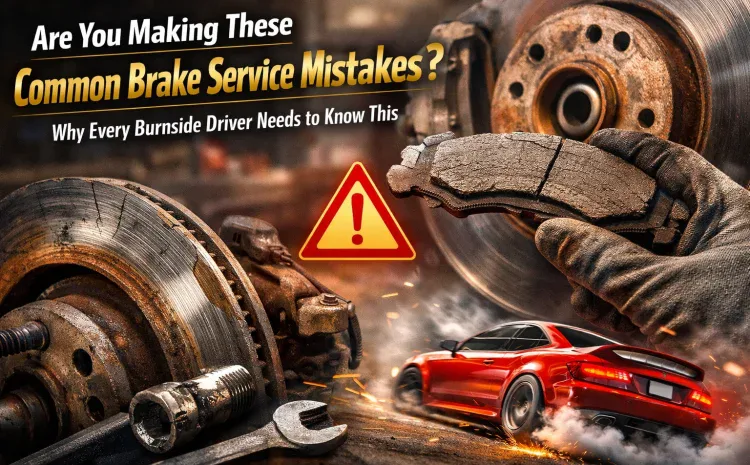
Are You Making These Common Brake Service Mistakes? Why Every Burnside Driver Needs to Know This
Picture this: You’re navigating the morning rush on Wright Avenue in Burnside, caffeine in hand, music playing. The car in front of you suddenly hits the anchors. You step on your brake pedal and: instead of a smooth, confident stop: you feel a weird vibration, hear a high-pitched squeak, or worse, the pedal feels like you’re stepping on a giant marshmallow.
At Higgins Driscoll’s Automotive, we see this scenario play out all the time. Many drivers think a “brake job” is a simple commodity: something you just shop for based on the lowest price. But your brakes are arguably the most critical safety system on your vehicle. When you’re driving through the hills and harbor-side streets of Dartmouth, you need to know that your car will stop exactly when and where you want it to.
Unfortunately, many car owners (and even some less-than-thorough shops) make critical mistakes during a brake service in Dartmouth. These errors don’t just lead to annoying noises; they can compromise your safety and lead to much more expensive car repair in Burnside down the road.
The High Stakes of “Good Enough”
In the automotive world, “good enough” usually isn’t. When it comes to stopping a 4,000-pound piece of machinery, the margin for error is razor-thin. We often think of brakes as just the pads, but it’s a complex hydraulic system that relies on physics, chemistry, and precision engineering.
Mistakes made during service can result in:
- Increased stopping distances (the difference between a close call and a collision).
- Premature wear of expensive components.
- Reduced fuel efficiency due to “dragging” brakes.
- Total brake failure in extreme situations.
Let’s dive into the most common mistakes we see and how you can avoid them.
Mistake #1: The Dreaded “Pad-Slap” (Ignoring the Rotors)
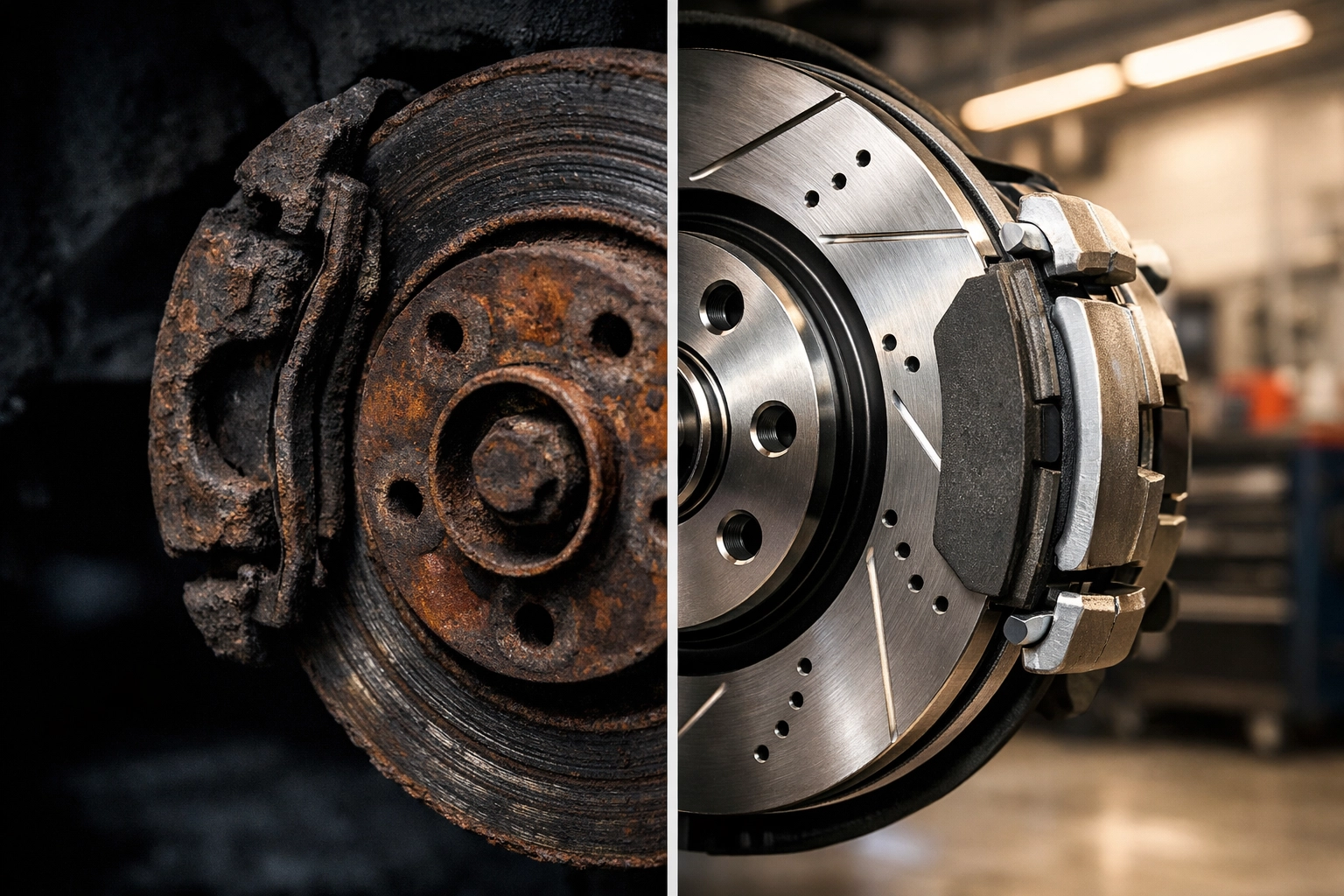
One of the most frequent errors in the industry is replacing brake pads without addressing the rotors. This is often called a “pad-slap.” While it saves a few dollars in the short term, it’s almost always a bad idea.
Your brake rotors (the metal discs the pads grip) wear down alongside the pads. They develop grooves, heat spots, and thin out over time. If you put brand-new, flat brake pads on an old, grooved rotor, the pads won’t make full contact. This reduces your stopping power immediately. Furthermore, old material deposits on the rotor can contaminate the new pads, leading to that “shuddering” feeling in your steering wheel and loud squealing.
Our Expert Advice: Always have your rotors measured and inspected. Most modern rotors are designed to be replaced alongside the pads to ensure a fresh friction surface and optimal performance.
Mistake #2: Treating Brake Fluid Like It Lasts Forever
Brake fluid is the lifeblood of your stopping system, yet it’s the most neglected fluid in the entire car. Unlike oil, which gets dirty, brake fluid is hygroscopic: meaning it actively absorbs moisture from the air.
In our humid Nova Scotia climate, this is a big deal. Over time, moisture gets into the lines, lowering the boiling point of the fluid. Under heavy braking (like coming down a steep hill in Dartmouth), the fluid can actually boil, creating gas bubbles. Since gas compresses and liquid doesn’t, your brake pedal will go straight to the floor.
The Fix: Check your owner’s manual or ask us about a fluid flush. Generally, replacing your brake fluid every two years is a smart way to prevent internal corrosion of your calipers and master cylinder, saving you from a major emergency breakdown.
Mistake #3: Letting the Caliper Hang Out (Literally)
This is a classic DIY or “backyard mechanic” mistake. When the brake caliper is removed to get to the pads, it shouldn’t just be left dangling by the rubber brake hose.
Caliper assemblies are heavy. Hanging them by the hose can cause internal damage to the rubber lining. This damage often acts like a one-way “check valve.” It might let fluid flow to the brakes when you step on the pedal, but prevent it from flowing back when you let go. This causes your brakes to stay partially applied, overheating your rotors and wearing out your new pads in a matter of weeks.
Mistake #4: Buying the “Budget” Special
We all love a good deal, but “economy” brake pads are often a false economy. Cheap pads are frequently made of inferior friction materials that:
- Generate more dust: Turning your nice wheels black in days.
- Make more noise: Squealing every time you pull up to a stoplight.
- Lack heat resistance: They “fade” much faster during heavy use.
At Higgins Driscoll’s Automotive, we believe in using high-quality components. It’s about the peace of mind that comes from knowing your brakes, exhausts, and suspensions are handled with parts that meet or exceed original equipment standards.
Mistake #5: Forgetting the Little Things (Hardware & Lube)
Brakes are moving parts. Every time you hit the pedal, the pads have to slide forward, and the caliper pins have to slide in and out. If these parts are rusted, dry, or caked with road salt, the brakes will stick.
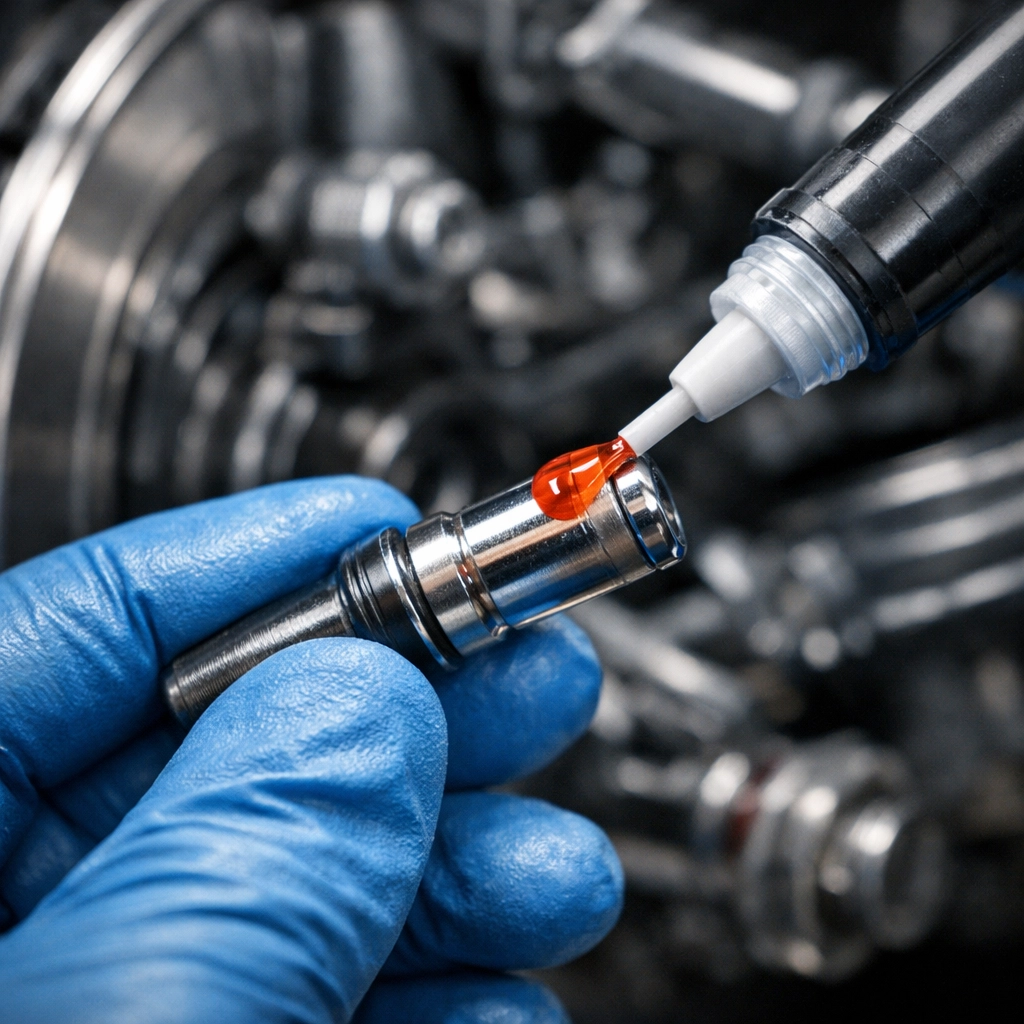
A common mistake is failing to clean and lubricate the caliper slide pins with the correct high-temperature silicone grease. Without this, you’ll get uneven pad wear: where one pad looks brand new and the other is worn down to the metal. We also see many people skip replacing the “quiet clips” or hardware, which is the leading cause of those annoying rattles and clicks.
Mistake #6: Installing Pads Backward
It sounds impossible, doesn’t it? How could someone put a brake pad in backward? Believe it or not, it happens more than you’d think, especially with DIY repairs or rushed jobs. Many modern pads have specific inner and outer placements or directional arrows. Installing them incorrectly can lead to catastrophic failure or, at the very least, a very loud and expensive grinding noise the moment you pull out of the driveway.
Why Dartmouth’s Roads Are Hard on Your Brakes
Living and driving in the Halifax Regional Municipality presents some unique challenges for your vehicle. Between the salt air, the heavy road salting in the winter, and our “undulating” topography (that’s a fancy way of saying we have lots of hills!), your brakes work harder here than they would in the flat prairies.
Salt is the enemy of metal. It causes the sliders to seize and the rotors to rust prematurely. That’s why a regular inspection during your oil change and general maintenance is so important. We can catch a sticking caliper or a thinning rotor before it leaves you stranded on the side of the Circumferential Highway.
Professional Car Repair in Burnside: When to Call the Pros
While there are many things you can do yourself on a car, your braking system is one area where professional expertise pays for itself. A qualified technician doesn’t just swap parts; they perform a comprehensive “system check.”
When you bring your vehicle to us for a brake service in Dartmouth, we:
- Inspect the entire hydraulic system for leaks or cracked hoses.
- Measure rotor thickness and check for “runout” (warping).
- Clean and lubricate all moving hardware to prevent sticking.
- Test the brake fluid for moisture content.
- Verify the ABS (Anti-lock Braking System) sensors are functioning correctly using high-tech computer diagnostics.
How to Decide: Is Your Car Telling You Something?
Not sure if you’re making a mistake by waiting? Here is a quick checklist of “Do Not Ignore” signs:
- The Squeak: A high-pitched noise usually means the “wear sensor” is touching the rotor. It’s a built-in alarm clock telling you it’s time for service.
- The Grind: If you hear a metal-on-metal grinding sound, stop driving immediately. Your pads are gone, and you are damaging your rotors (and potentially your safety).
- The Pulse: A vibration in the pedal when braking usually means warped rotors.
- The Pull: If the car pulls to one side when you brake, a caliper might be seized.
- The Light: If your “BRAKE” or “ABS” dashboard light comes on, your car’s computer has detected a serious fault.
Trust the Locals for Your Car Repair in Burnside
At Higgins Driscoll’s Automotive, we’ve built our reputation on being a trustworthy local full-service auto shop. We know that your car is more than just a way to get from A to B; it’s what keeps your family safe and your life moving.
Avoid the “budget” mistakes and the DIY headaches. Whether you need a simple inspection or a full system overhaul, we’re here to provide the expert advice and quality service you deserve. We’ll talk you through the options, explain the costs transparently, and make sure you drive away with total peace of mind.
Ready for a smoother, safer ride? Don’t wait until you’re hearing a grind. Contact us today to book your brake inspection and keep your car performing at its best on our Dartmouth roads.