![Higgins Driscolls Auto [01a]_pages-to-jpg-0001-min](https://driscollsauto.com/wp-content/uploads/2021/10/Higgins-Driscolls-Auto-01a_pages-to-jpg-0001-min-scaled.jpg "Higgins Driscolls Auto [01a]_pages-to-jpg-0001-min")

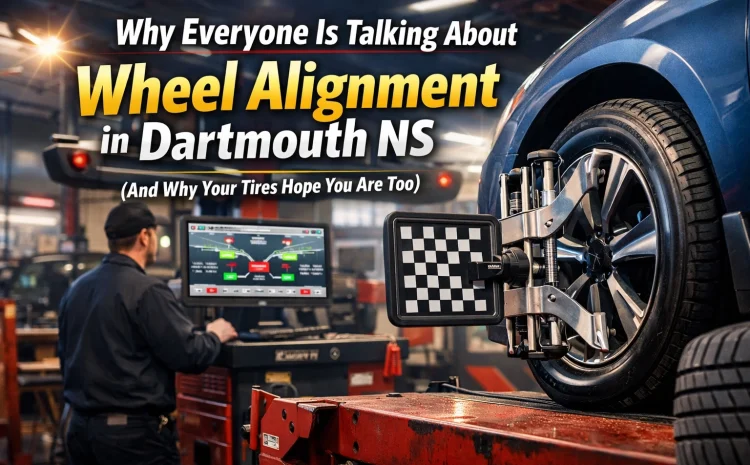
Why Everyone Is Talking About Wheel Alignment in Dartmouth NS (And Why Your Tires Hope You Are Too)
If you’ve spent any time driving around the Circumferential Highway or navigating the busy turns near the Mic Mac Mall lately, you might have noticed something. Maybe your car is drifting slightly to the left toward Lake Banook when you want to go straight. Or perhaps, as you’re heading into Burnside for work, you realize you’re gripping the steering wheel a little tighter than usual just to keep the vehicle centered.
You aren’t imagining things. Our Dartmouth roads: especially after a typical Nova Scotia winter: can be absolute minefields for your vehicle’s suspension. Lately, it seems like everyone in town is talking about wheel alignment in Dartmouth NS, and for good reason. It’s the difference between a smooth, safe ride and a repair bill that makes your eyes water.
At Higgins Driscoll’s Automotive, we see the results of misaligned wheels every single day. While it might seem like a minor “adjustment,” it is actually one of the most critical maintenance tasks for your vehicle’s health.
What Exactly Is Wheel Alignment? (The “Marathon Runner” Metaphor)
To understand alignment, stop thinking about the tires for a second and think about a marathon runner. If that runner has a perfect gait, their feet hit the ground evenly, their hips are square, and they can run for miles with minimal fatigue. But if one ankle is slightly turned inward, or if they’re leaning too far to one side, they’re going to get sore. Eventually, they’ll wear out one shoe faster than the other, and their knees will start to ache.
Your car is the runner. Wheel alignment isn’t actually an adjustment of the tires or wheels themselves; it’s an adjustment of the vehicle’s suspension system: the complex network of components that connects the vehicle to its wheels.
When we perform a wheel alignment in Dartmouth NS, we are adjusting the angles of the tires so they make contact with the road exactly how the manufacturer intended. If those angles are off by even a fraction of a degree, your car is essentially “walking” crooked.
Why Dartmouth Roads Are the Ultimate Test for Your Suspension
We love Dartmouth, but let’s be honest: our infrastructure takes a beating. Between the freeze-thaw cycles that create legendary potholes on Pleasant Street and the salt used to clear the winter slush, your car’s suspension is under constant siege.
Potholes and Frost Heaves
Hitting a deep pothole isn’t just a jarring experience for your coffee; it’s a physical trauma for your car. A single significant impact can knock your suspension components out of place. Over time, smaller frost heaves and uneven pavement act like a slow-motion version of that big hit, gradually nudging your wheels out of alignment.
The Occasional Curb Encounter
We’ve all been there. You’re trying to navigate a tight parking spot downtown or turning a bit too sharply into a driveway, and thump: you clip the curb. It might not look like damage was done, but that sudden force is often enough to shift the delicate settings of your “toe” or “camber.”

The Telltale Signs: Is Your Car Trying to Tell You Something?
Your car doesn’t have a voice, but it definitely communicates through “body language.” If you notice any of the following, your vehicle is practically screaming for an auto repair Dartmouth professional to take a look:
- The “Drift”: Your car pulls to one side or the other when you’re trying to drive straight on a level road.
- The Crooked Steering Wheel: When you’re driving straight, your steering wheel logo is tilted or off-center.
- Vibrations: You feel a shimmy or shaking in the steering wheel, which can sometimes indicate that your alignment is so far off it’s affecting your tire balance.
- Squealing Tires: If you hear your tires “chirping” or squealing during turns at low speeds, they are likely dragging across the pavement rather than rolling smoothly.
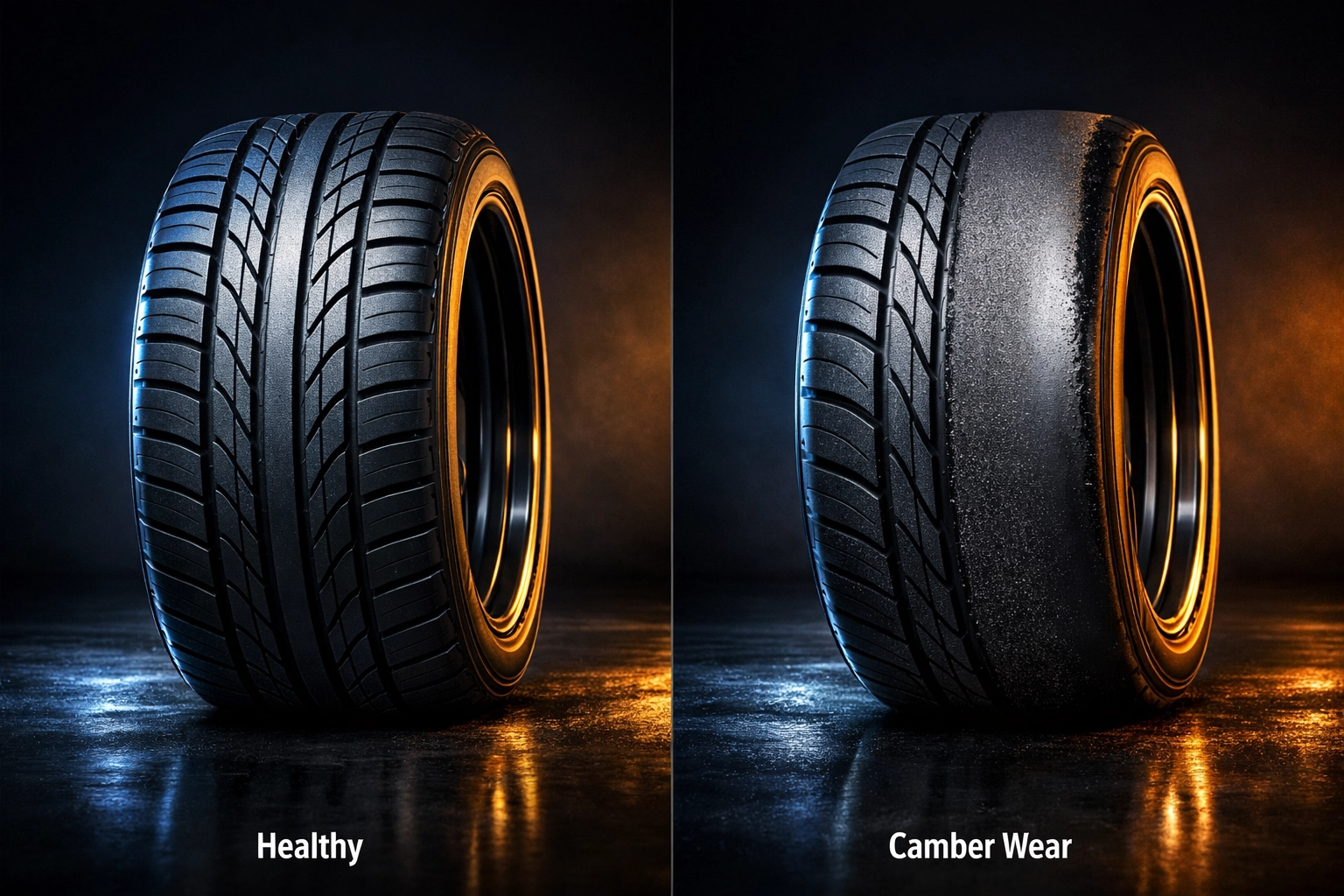
- Uneven Tire Wear: This is the big one. If the tread is wearing down on the inside or outside of the tire faster than the rest, you have an alignment problem.
Why Your Tires Are Literally Begging for an Alignment
If your tires could talk, they’d be the biggest advocates for regular alignment checks. Here is why proper alignment is their best friend:
1. Massive Cost Savings on Rubber
A set of quality tires is a significant investment. When your alignment is off, you are essentially dragging your tires across the asphalt at an angle. This “scrubbing” action can ruin a brand-new set of tires in just a few thousand kilometers. By spending a little on an alignment now, you are saving hundreds (or even over a thousand) dollars on premature tire replacement.
2. Fuel Efficiency (Saving at the Pump)
When your wheels aren’t aligned, they fight each other. One wheel might be trying to go slightly left while the other is going straight. This creates “rolling resistance.” Your engine has to work significantly harder to push the car forward, which can tank your fuel economy by as much as 10%. In today’s economy, nobody wants to pay a 10% “misalignment tax” at the gas station.
3. Safety and Handling
In Nova Scotia, we deal with rain, ice, and everything in between. If your alignment is out, your tires aren’t making full, even contact with the road. This reduces your traction and makes your car less predictable in an emergency maneuver. Proper alignment ensures that when you need to brake suddenly or swerve to avoid a deer, your car responds exactly the way it should.
The Technical Bits: Toe, Camber, and Caster
When you visit us for auto repair in Dartmouth, our technicians use high-tech sensors to measure three specific angles. You don’t need to be a mechanic to understand them, but knowing the basics helps you see why precision matters.
- Toe: Think of this as looking down at your own feet. “Toe-in” is when your toes point toward each other; “Toe-out” is when they point away. If your car’s wheels are “toe-in” or “toe-out,” they are constantly scrubbing against the road.
- Camber: This is the inward or outward tilt of the tire when viewed from the front. Too much tilt either way leads to uneven wear on the edges of the tire.
- Caster: This is the angle of your steering axis. It’s what helps your steering wheel return to the center after a turn. If this is off, your steering will feel heavy or “darty.”
For a deeper dive into why we use advanced tools to measure these, check out our post on why high-tech computer diagnostics translate to faster repairs.
How to Decide: Do You Need an Alignment Check?
Not sure if you should book an appointment? Follow these practical steps to evaluate your vehicle:
- The Visual Inspection: Park on a flat surface and look at your front tires. Is the tread depth consistent across the whole tire, or is one side smooth while the other has deep grooves?
- The “Hands-Off” Test (Do this safely!): On a straight, flat, deserted road with no wind, briefly loosen your grip on the steering wheel. If the car immediately veers toward the ditch or the center line, you’re out of alignment.
- The Steering Wheel Check: When you are parked with your wheels straight, is the steering wheel perfectly centered? If it’s cocked to the side, your suspension is trying to compensate for a pull.
- The Mileage Rule: Most experts recommend an alignment check every 10,000 to 12,000 kilometers, or at least once a year. If you’ve just put on your summer or winter tires, it’s the perfect time to ensure they are starting their season on the right foot.
Trust the Neighbors at Higgins Driscoll’s Automotive
At Higgins Driscoll’s Automotive, we pride ourselves on being a local full-service auto shop that Dartmouth drivers can trust. We don’t just “eyeball” it; we use precision equipment to ensure your vehicle meets factory specifications.
Maintaining your vehicle isn’t just about fixing things when they break; it’s about preventive maintenance that saves you hundreds in the long run. An alignment check is the ultimate “ounce of prevention.”
Is your car pulling to the side? Are your tires wearing out faster than they should? Don’t wait until you’re forced to buy a whole new set of tires. Give us a shout or stop by the shop. We’ll get you straightened out and back on the road with total peace of mind.
Ready to get your wheels back in line? Contact us today to schedule your alignment check!