Navigating Your Next Motor Vehicle Inspection in NS: What You Really Need to Know
If you live in Nova Scotia, you know the feeling. You glance at the bottom corner of your windshield and realize that little yellow sticker is about to expire. For many drivers in Dartmouth and the surrounding HRM, the provincial motor vehicle inspection (MVI) feels like a high-stakes test. Will it pass? Will it need thousands of dollars in repairs?
At Higgins Driscoll’s Automotive, we’ve seen thousands of vehicles come through our bays for their motor vehicle inspection ns requirements. We know that the stress usually comes from not knowing what to expect. The good news is that the MVI isn’t a trap; it’s a safety standard designed to keep everyone on our roads safe.
In this guide, we’re going to break down exactly how the process works, what we look for, and how you can prepare so you can drive away with a fresh sticker and total peace of mind.
Understanding the MVI Timeline in Nova Scotia
One of the most common questions we get at our shop in Burnside is, “How often do I actually need this done?” The answer depends on what you’re driving and when you bought it.
For the vast majority of passenger vehicles and light trucks (what the province calls Type 1 vehicles), a safety inspection is required every two years. However, there are some nuances:
- New Vehicles: If you bought a brand-new car from a dealer, your initial MVI sticker is actually valid for three years.
- Used Vehicles: If you’re buying or selling a used vehicle privately, it needs a valid MVI done within 30 days before the date of sale in the seller’s name, or the buyer must get a new one before the permit can be transferred.
- Moving to NS: If you’ve just moved to the Dartmouth area from out of province, you have 30 days to get a Nova Scotia MVI once you register your vehicle here.
Keeping track of this date is important because driving with an expired sticker can result in a hefty fine, and more importantly, it means your vehicle’s safety systems haven’t been professionally verified in quite some time.
What the Inspector is Actually Looking At
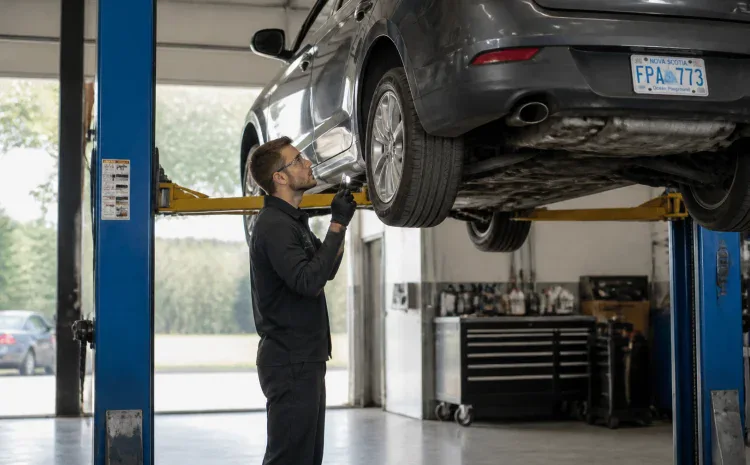
When we pull your car into the bay for a motor vehicle inspection in NS, our Red Seal technicians follow a strictly regulated checklist provided by the province. We aren’t just looking for “problems”: we are specifically checking the components that affect the safe operation of the vehicle.
The Foundation: Brakes, Steering, and Suspension
These are the big ones. We check your brake pads, rotors, lines, and hoses. If your pads are worn below the legal limit or your brake lines are severely corroded, the vehicle won’t pass. We also look at the steering linkage and suspension components like shocks, struts, and ball joints. Given the “character” of some of our local roads in Dartmouth, these parts take a lot of abuse.
Visibility and Lights
Believe it or not, something as simple as a burnt-out license plate bulb or a cracked mirror can lead to a rejection. We check every single light: headlights, high beams, signals, brake lights, and even your hazard lights. We also inspect the windshield for cracks or chips that obstruct the driver’s view.
The Exhaust and Fuel Systems
We’re looking for leaks in the exhaust system that could allow carbon monoxide to enter the cabin, as well as ensuring the muffler and pipes are securely mounted. The fuel system is checked for any signs of leaks or advanced corrosion that could become a hazard.
The Dreaded “NS Rust”
We live on the coast, and we use a lot of salt on the roads in the winter. Inspectors are looking for structural rust: meaning holes in the frame, rocker panels, or floorboards near seatbelt mounts. Surface rust is usually fine, but if the integrity of the metal is compromised, it’s a safety issue.

The Rejection Sticker: It’s Not the End of the World
If your vehicle doesn’t pass the inspection, we don’t just send you on your way with bad news. You’ll receive a “rejection” sticker (which is usually red). This doesn’t necessarily mean you have to tow the car away, but it does mean the clock is ticking.
In Nova Scotia, you have 10 days from the date of the rejection to fix the listed issues and bring the vehicle back for a re-inspection. If you bring it back to the same station within those 10 days, you generally won’t be charged a second full inspection fee for the mechanic to verify the repairs.
It’s important to note that the 10-day window is for getting repairs done; it doesn’t give you a “free pass” to drive an unsafe vehicle. If a component is deemed dangerous, our team at Higgins Driscoll’s will always be upfront with you about whether the car is safe to drive to your next destination.
Common Failure Points for Dartmouth Drivers
Because we work on so many vehicles for drivers in Dartmouth and Burnside, we notice patterns. If you want to avoid a surprise during your motor vehicle inspection in NS, pay close attention to these areas:
- Brake Lines: The salt used on our roads throughout the winter is incredibly hard on metal brake lines. We often find lines that are ready to burst due to corrosion.
- Tires: Check your tread depth! If your tires are worn down to the wear bars or have “bubbles” in the sidewalls, they will fail.
- Wiper Blades and Washers: If your wipers are streaking or your washer fluid doesn’t spray, that’s an automatic fail. It’s a cheap and easy fix to do before you arrive.
- Suspension Play: Our potholes are legendary. Worn ball joints and tie-rod ends are very common failure points in the HRM.
How to Pass on Your First Try
The best way to handle an MVI is to stay on top of your general auto repairs and maintenance throughout the year. However, if your inspection is coming up, here’s a quick DIY “pre-check” you can do in your driveway:
- Walk around the car and test every single light.
- Check your horn: does it actually honk?
- Look at your tires for any visible damage or low tread.
- Ensure your windshield isn’t cracked in the driver’s line of sight.
- Make sure there are no warning lights (like the ABS or Airbag light) on your dashboard.
Trust the Experts at Higgins Driscoll’s Automotive
At the end of the day, a motor vehicle inspection in NS is about keeping you and your family safe. At Higgins Driscoll’s Automotive, we pride ourselves on being a family-owned shop that treats our customers like neighbors. Our Red Seal certified technicians have over 60 years of combined experience, and as a Bumper to Bumper Canada shop, we follow the highest industry standards.
We don’t believe in “hustling” or upselling you on things you don’t need. We’ll give you a clear, honest assessment of what your vehicle needs to be safe and legal, and we’ll explain the “why” behind every recommendation.
Is your yellow sticker about to expire? Don’t wait until the last minute. Give us a call or stop by our shop in Dartmouth to book your inspection. Let’s get you back on the road with a vehicle you can trust.
Ready to book your MVI? Contact us today to schedule your appointment!
Transmission Repair in Dartmouth: How to Spot the Warning Signs Before You’re Stranded

Your vehicle’s transmission is easily one of its most complex and expensive components. While the engine provides the power, the transmission is responsible for making sure that power actually reaches the wheels at the right speed. When it’s working well, you don’t even think about it. But when it starts to fail, it can go from a minor annoyance to a multi-thousand-dollar headache very quickly.
For drivers in Dartmouth and Burnside, our vehicles face some unique challenges. From the stop-and-go traffic of the MacKay Bridge to the sub-zero temperatures of a Nova Scotia winter, your transmission is constantly working hard.
At Higgins Driscoll’s Automotive, we believe that the best transmission repair is the kind that never has to happen. By catching the early warning signs and keeping up with maintenance, you can extend the life of your vehicle and avoid the stress of a breakdown.
Why Your Transmission Needs Extra Love in Nova Scotia
Transmission fluid isn’t just a lubricant; it’s also a hydraulic fluid and a coolant. In our climate, the extreme temperature swings can cause the fluid to break down faster. In the winter, the fluid is thick and sluggish until it warms up. In the summer, or when sitting in heavy traffic in Burnside, the transmission can get incredibly hot.
Heat is the number one enemy of a transmission. Once the fluid begins to degrade, it loses its ability to protect the metal gears and clutches inside the unit. This leads to friction, more heat, and eventually, total failure.
Warning Signs Your Transmission is Struggling
The key to saving money on transmission repair in Dartmouth is early detection. If you notice any of the following symptoms, it’s time to bring your vehicle in for a checkup:
1. Slipping Gears
If you feel like your engine is “racing” or revving up, but the car isn’t accelerating as it should, your transmission might be slipping. It might feel like the car is momentarily losing power or struggling to find the right gear.
2. Rough or Delayed Shifting
Your car should transition between gears smoothly. If you hear a loud “clunk” or feel a hard jolt when the car shifts, something is wrong. Similarly, if you put the car in “Drive” or “Reverse” and there is a long pause before the gear engages, that’s a classic sign of internal wear or low fluid pressure.
3. Strange Smells
Have you ever noticed a slightly sweet, acrid, or “burnt” smell after driving? Transmission fluid has a very distinct odor. If it’s burning, it usually means the transmission is overheating or the fluid is so old it’s no longer doing its job.
4. The Tell-Tale Puddle
Keep an eye on your driveway. Transmission fluid is typically bright red or pink (though it can turn dark brown as it gets older). If you see a red puddle forming under the middle of your car, you likely have a leak. Even a small leak can lead to a major failure if the fluid level gets too low.

Common Transmission Issues Around the HRM
Because of our local geography and climate, we see a lot of “heavy-duty” wear on transmissions.
- Stop-and-Go Traffic: Constant shifting in heavy Dartmouth traffic generates a lot of internal heat.
- Towing and Hauling: Many of our customers in the Burnside area use their trucks for work. Towing trailers or carrying heavy loads puts an immense amount of strain on the transmission’s torque converter and clutches.
- Winter Spinning: If you’ve ever been stuck in a snowbank and “rocked” your car back and forth or let the tires spin at high speeds to get out, you’ve put a massive amount of stress on the transmission. This is a common cause of premature failure in Nova Scotia.
The Power of Preventative Maintenance
Most manufacturers suggest a transmission fluid service every 50,000 to 100,000 kilometers, but for drivers in Dartmouth, we often recommend checking it more frequently.
A standard transmission service at Higgins Driscoll’s involves more than just “topping it up.” We can perform a fluid exchange or a filter change to ensure that the “blood” of your transmission is clean and capable of protecting those expensive internal parts. This simple routine maintenance costs a fraction of what a full rebuild would.
Should You Repair, Rebuild, or Replace?
If we do find a major problem, we don’t just jump to the most expensive option. We’ll look at the overall health of your vehicle and your budget to help you decide on the best path forward:
- Repair: Sometimes a shifting issue is just a faulty sensor or a simple solenoid that can be replaced without taking the whole transmission apart.
- Rebuild: This involves taking the transmission out, cleaning it, and replacing only the worn or broken parts.
- Replace: In some cases, installing a remanufactured transmission (often backed by a strong warranty) is the most cost-effective and reliable long-term solution.
Your Local Experts for Transmission Repair in Dartmouth
At Higgins Driscoll’s Automotive, we know that transmission trouble is scary. It’s a big part of your car, and it can be a big expense. That’s why we focus on thorough diagnostics first. We use high-tech equipment to “talk” to your car’s computer and find out exactly what’s happening before we ever pick up a wrench.
Our goal is to get you back on the road safely without any unnecessary “hustle.” We’re a family-owned shop, and we’ve spent decades building a reputation for honesty and quality workmanship in the Dartmouth community.
Don’t wait for a tow truck. If your car is acting up, book an appointment for a transmission check today!