

Your Car’s Coolant System Is Begging for Attention: How to Avoid an Overheat on the Circ
A summer drive on the Circumferential Highway should be routine. But when traffic slows, the temperature climbs, and your vehicle’s cooling system is already struggling, a normal trip through Dartmouth can quickly become a roadside emergency.
Your engine produces intense heat every time you drive. The coolant system is responsible for carrying that heat away from the engine and releasing it through the radiator. When the coolant level is low, a hose is leaking, the thermostat is stuck, or the radiator fan is not working properly, the engine temperature can rise faster than the system can control it.
Overheating is not a problem to ignore until the temperature gauge reaches the red zone. In many cases, your vehicle gives you warnings first. Knowing what to look for: and booking heating and cooling system service before a small issue becomes major engine damage: can help keep you moving safely around Dartmouth and Burnside this summer.
Why summer driving can expose cooling system problems
Warm weather does not automatically cause a healthy vehicle to overheat. However, summer conditions can place additional demands on a cooling system that is already weak.
Stop-and-go traffic around Dartmouth reduces the airflow moving through the radiator. Long highway drives on the Circumferential Highway keep the engine working continuously. Running the air conditioning adds another source of heat under the hood, while passengers, cargo, towing, and steep grades can increase engine load further.
A cooling system with a small leak or restricted coolant flow may cope during a short local trip but fail during a longer drive. That is why an inspection before a summer road trip can be worthwhile, especially if your vehicle has been losing coolant or running warmer than usual.
Warning signs your coolant system needs attention
1. The temperature gauge is running higher than normal
Your temperature gauge should generally remain in its normal operating range. If it begins creeping upward during traffic or highway driving, take it seriously: even if it has not reached the red zone.
A higher-than-usual reading can be caused by low coolant, a failing thermostat, a damaged radiator, a worn water pump, a cooling fan problem, or a restriction in the system. The longer you continue driving while the engine is too hot, the greater the risk of expensive damage.
2. You smell something sweet
Coolant often has a distinctive sweet smell. If you notice that odour under the hood, around the front of the vehicle, or inside the cabin, it may indicate a leak.
Coolant can escape from a radiator hose, water pump, radiator, heater core, reservoir, or connection point. A leak may be small enough that you do not see a puddle immediately, but the system can still lose enough fluid over time to cause overheating.
3. You see steam under the hood
Steam or vapour coming from the front of the vehicle is an urgent warning. It may mean coolant is leaking onto a hot engine component or boiling inside an overheated system.
If this happens while you are on the Circ, reduce your speed, turn off the air conditioning, and pull over at the first safe opportunity. Do not continue driving simply because the steam appears to stop. The underlying problem remains, and the engine may overheat again.
4. The coolant level keeps dropping
The coolant reservoir is usually translucent and marked with minimum and maximum lines. Check the level only when the engine is completely cool, and follow the instructions in your owner’s manual.
If the level is repeatedly low, topping it up is not a permanent repair. Coolant does not normally disappear from a sealed system. A consistently low level points to a leak or another cooling system fault that needs to be diagnosed.
5. Your heater is blowing cool air
A vehicle heater uses hot engine coolant to warm the cabin. If the engine is warm but the heater suddenly blows cool air, coolant may not be circulating correctly.
This can happen when the coolant level is too low, air has entered the system, or there is a problem with the thermostat, heater core, or water pump. Poor heater performance may seem like a comfort issue in summer, but it can also provide an early clue that the engine cooling system needs attention.
What to check before a longer summer drive
A few simple checks can help you spot problems before heading onto the Circumferential Highway.
With the engine cold, look at the coolant reservoir and confirm that the fluid is between the markings. Inspect the visible hoses for cracks, swelling, or damp areas. Look beneath the front of the vehicle for repeated puddles or spots, and pay attention to any sweet smell after parking.
The coolant itself should not look rusty, sludgy, cloudy, or contaminated. The correct coolant type and mixture vary by vehicle, so do not assume that any antifreeze on the shelf is suitable. Your owner’s manual or a qualified technician can help confirm what your vehicle requires.
It is also worth paying attention to recent changes. Has the gauge started sitting higher? Has the air conditioning become less effective? Have you needed to add coolant? Has the engine fan become unusually loud: or failed to turn on when the engine is hot?
These details can help a technician identify the cause more efficiently.
What to do if your car overheats on the Circ
If the temperature gauge enters the red zone, a warning light appears, or steam begins escaping, act promptly.
- Turn off the air conditioning and reduce the engine’s workload.
- Turn the cabin heater to its highest setting if you need to move a short distance to a safe stopping place. This may draw some heat away from the engine, but it is not a repair.
- Pull over safely and turn off the engine as soon as possible.
- Keep your distance from steam and hot components.
- Never remove a radiator cap while the engine is hot. The cooling system may be pressurized, and boiling coolant can cause serious burns.
- Wait for the vehicle to cool completely before checking the reservoir.
- If the coolant is low, do not assume that adding fluid makes it safe to continue. If the gauge rises again, arrange for roadside assistance or a tow.
Driving an overheating vehicle can turn a relatively straightforward repair into major engine work. Excessive heat can damage gaskets, cylinder heads, and other internal components. If the vehicle has overheated once, it deserves a proper inspection before returning to regular driving.
How professional cooling system service helps
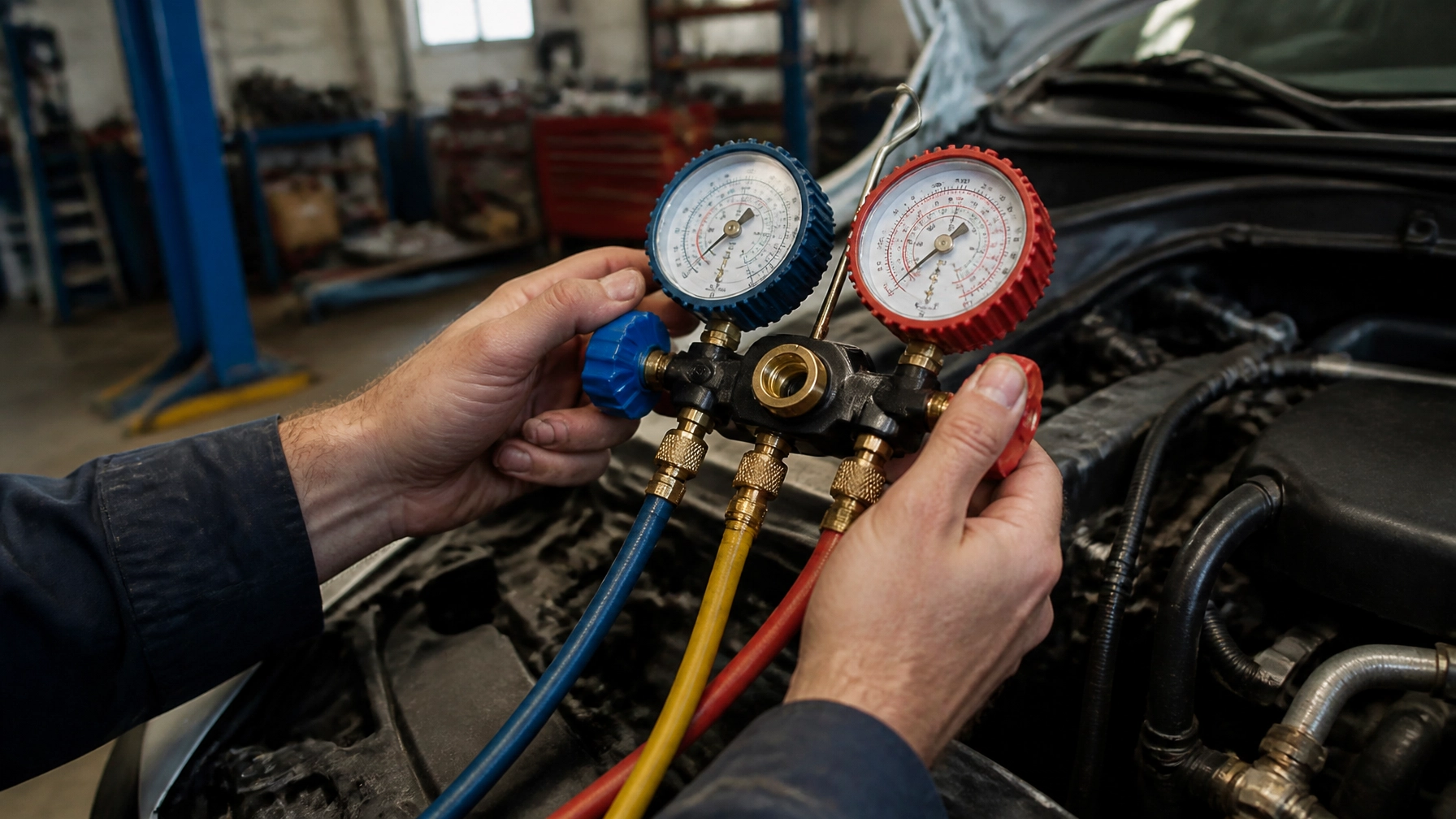
Cooling system problems are not always visible from the outside. A professional inspection can include checking coolant condition and level, inspecting hoses and connections, testing for leaks, evaluating the thermostat and water pump, and confirming that the radiator fan and related controls are operating properly.
At Higgins Driscoll’s Automotive, our heating and cooling system services cover vehicle comfort and climate-control concerns, including air conditioning diagnosis, repairs, and refrigerant service for systems using R134a or 1234YF. More importantly, our technicians can help investigate the warning signs that may appear alongside a cooling concern, such as rising engine temperature, coolant odours, or poor heater performance.
A proper diagnosis is better than repeatedly adding coolant and hoping the problem goes away. It helps identify the source of the fault so the repair can be completed correctly.
Do not wait for the first hot day
Many drivers think about coolant service only after seeing steam. By then, the system may already be under considerable stress.
If your vehicle is due for routine maintenance, has an unknown coolant service history, or has shown any warning signs, summer is a sensible time to have it checked. A cooling system inspection can provide useful peace of mind before commuting through Burnside, travelling across Dartmouth, or taking a longer highway trip.
For dependable auto repair in Dartmouth, Higgins Driscoll’s Automotive provides thorough diagnostics and maintenance for all makes and models. Our Red Seal certified technicians bring more than 60 years of combined experience, and as a trusted Bumper to Bumper Canada shop, we have access to quality parts and industry-leading service standards. Repairs are warranty-backed, and our family-owned team focuses on honest recommendations without the pressure of unnecessary work.
A small coolant leak or temperature warning is easier to address before it leaves you stranded. If your car has been running hot, losing coolant, or struggling with heating or cooling, contact Higgins Driscoll’s Automotive at 902-465-3290 or visit us at 26 Bancroft Lane in Dartmouth, NS. Book your appointment today and let our team help keep your vehicle cool, reliable, and ready for the road.