

The Winter Readiness Checklist: 9 Things Every Dartmouth Driver Should Do Before the First Snowfall
Winter rarely waits for a convenient day. In Dartmouth and Burnside, the first serious snowfall can arrive while drivers are still adjusting to shorter days, colder mornings, and heavier traffic around the Circumferential Highway.
That is why September and early October are smart times to start preparing. Booking winter tires before the October and November rush, checking your battery before the first deep freeze, and addressing small maintenance concerns now can help prevent a stressful breakdown later.
Use this nine-point winter readiness checklist to prepare your vehicle for salt-covered roads, freeze-thaw cycles, slush, and early snowfalls throughout the Dartmouth area.
1. Book your winter tires before the seasonal rush
Winter tires should be one of the first items on your checklist. Once temperatures regularly fall near 7°C, winter tire rubber remains more flexible than all-season rubber, helping improve traction on cold, wet, snowy, and icy roads.
Waiting until the first major snowfall can make it harder to get the tire size and appointment time you want. Dartmouth drivers should consider booking early, especially if they need new tires rather than simply having an existing set installed.
Before installation, have the tires checked for:
- Adequate tread depth
- Uneven wear
- Cracks, bulges, or other damage
- Correct sizing and load rating
- Valve and wheel condition
Winter tires work best as a complete set of four. Mixing winter and all-season tires can create uneven handling, particularly during emergency braking or cornering on slippery roads.
Higgins Driscoll’s Automotive provides tire sales and installation in Dartmouth, along with wheel alignment service to help protect your investment.
2. Have the battery and charging system load-tested
Cold weather exposes weak batteries quickly. A battery that starts your vehicle reliably on a mild September morning may struggle when temperatures drop well below freezing.
A proper battery load test can show whether the battery still has enough reserve capacity for cold starts. It is also worth checking the charging system, since a weak alternator or poor connection can leave you with the same no-start problem even if the battery itself appears healthy.
Ask for an inspection of:
- Battery strength and reserve capacity
- Alternator output
- Battery terminals and cable connections
- Corrosion around the posts
- The condition of the battery case
If your vehicle has been cranking slowly, the interior lights have been dimming, or the battery is several years old, do not wait for the first cold snap to investigate.
3. Check the coolant and antifreeze protection
Your cooling system does more than prevent summer overheating. The coolant mixture must also protect the engine and cooling system from freezing during a Nova Scotia winter.
A technician can test the coolant’s freeze protection and check whether the fluid is at the correct level. The system should also be inspected for leaks, damaged hoses, a weak radiator cap, and signs of corrosion.
This is especially important if:
- The coolant has not been serviced according to the manufacturer’s schedule
- You have recently topped up the system with water
- The temperature gauge has been running unusually high
- You notice a sweet smell or a puddle under the vehicle
- The heater is not producing consistent warm air
Our previous guide to your car’s coolant system and avoiding an overheat on the Circ explains why coolant concerns deserve attention before they become a roadside problem.
4. Test the block heater and prepare for cold starts
If your vehicle is equipped with a block heater, check it before you need it. A damaged cord, loose connection, or failed heating element will not be obvious until a particularly cold morning.
Look over the cord for cracking, exposed wiring, or damage near the plug. You can also have the system tested during a winter readiness appointment.
For cold-start preparation:
- Use the engine oil viscosity recommended for your vehicle
- Keep the fuel level from dropping too low
- Avoid repeatedly cranking a vehicle that will not start
- Park where the block heater cord can be used safely
- Follow the vehicle manufacturer’s guidance for block heater use
A block heater can make starting easier and reduce the strain placed on the battery and starter during very cold weather.
5. Replace worn wipers and fill the washer reservoir with winter fluid
Salt spray, slush, freezing rain, and road grime can make visibility difficult on the Circ and around Burnside. Wiper blades that merely seem “good enough” in light rain may leave dangerous streaks when the windshield is covered in dirty spray.
Replace blades that:
- Leave streaks or unwiped sections
- Skip across the glass
- Chatter during use
- Have cracked or hardened rubber
Fill the washer reservoir with winter-grade fluid rated for below-freezing temperatures. Summer washer fluid or plain water can freeze in the reservoir, lines, or nozzles when you need it most.
Visibility also includes headlights, taillights, signals, and the condition of the windshield. For a closer look at those items, read Dark Commutes Ahead: Why Headlight and Visibility Checks Matter as the Days Get Shorter.
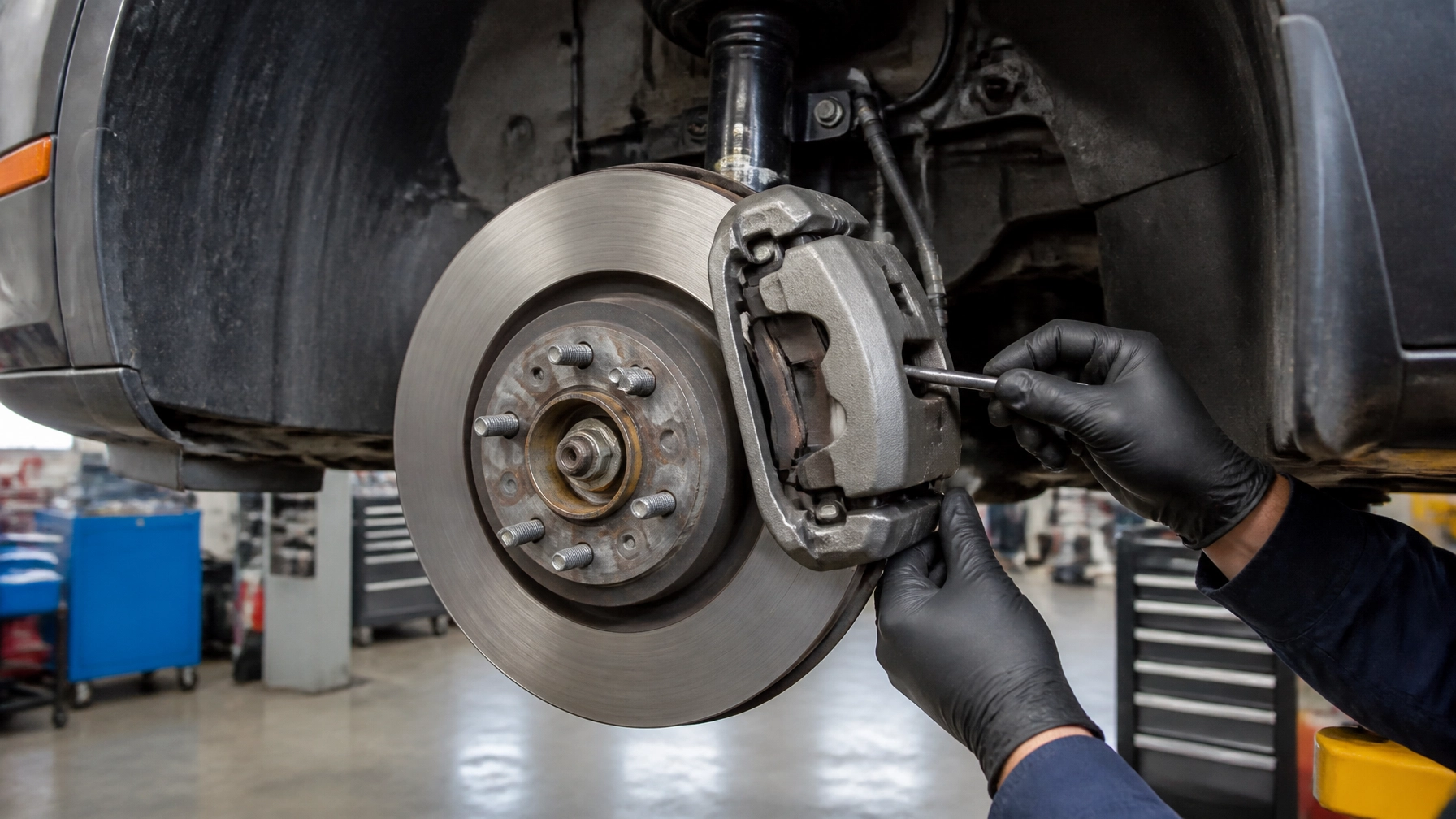
6. Inspect the brakes before roads become slippery
Good brakes matter in every season, but winter driving leaves less room for error. Snow, ice, slush, and packed salt can make stopping distances longer, even when your vehicle is fitted with good winter tires.
A pre-winter brake inspection should include the pads, rotors, calipers, hoses, lines, and parking brake. In Nova Scotia, road salt can accelerate corrosion on metal brake components, so a visual check is not always enough.
Have your brakes inspected if you notice:
- Squealing, grinding, or scraping
- A soft or spongy pedal
- Pulling while braking
- Vibration through the steering wheel or pedal
- A brake warning light
- Uneven brake pad wear
7. Set tire pressure for cold temperatures
Tire pressure drops as the temperature falls. A noticeable change between a warm September afternoon and a freezing January morning can leave your tires underinflated.
Check tire pressure when the tires are cold and follow the pressure listed on the driver’s door-jamb label: not the maximum pressure printed on the tire sidewall. Remember to check the spare tire if your vehicle has one.
Correct pressure helps support:
- Steering and braking response
- Tire life
- Fuel economy
- Even tread wear
- Stability on wet and snowy roads
Cold weather is also a good time to look for uneven wear. If the inside or outside edge of a tire is wearing faster than the rest, the cause may be alignment, suspension wear, or incorrect inflation.
8. Put together a winter emergency kit
Even a well-maintained vehicle can be delayed by a collision, road closure, sudden storm, or traffic problem. Keep a basic emergency kit in the vehicle throughout the winter rather than assembling one only when a storm is forecast.
Useful items include:
- Ice scraper and snow brush
- Small shovel
- Booster cables or a properly rated jump starter
- Flashlight with spare batteries
- Warm gloves, hat, and extra clothing
- Blanket
- First-aid kit
- Bottled water and non-perishable snacks
- Phone charger or power bank
- Traction material such as sand or kitty litter
- Reflective warning device
Keep the kit accessible and make sure snow and ice can be cleared completely from the roof, hood, windows, mirrors, lights, and licence plate before every trip. Snow sliding off the roof can block your view or create a hazard for other drivers.
9. Schedule a pre-winter inspection and check your MVI status
A winter readiness inspection brings the individual checks together. A technician can look for problems that are difficult to spot at home, including worn suspension parts, corroded brake lines, exhaust concerns, fluid leaks, steering play, and warning lights.
This is also a sensible time to check your Motor Vehicle Inspection status. If your MVI is approaching, preparing early gives you time to address safety concerns before winter appointments become difficult to find.
Our guide, Navigating Your Next Motor Vehicle Inspection in NS, explains common inspection areas for Dartmouth and Burnside drivers, including brakes, lights, tires, wipers, suspension, exhaust, and rust-related concerns.
Do not treat an MVI check as a substitute for winter maintenance. Instead, use it as one part of a broader inspection that helps confirm your vehicle is ready for the conditions ahead.
Prepare early with a local winterization team
Winter preparation is easier when it is handled before the first snowfall, not during the first storm. At Higgins Driscoll’s Automotive, our Red Seal certified technicians bring more than 60 years of combined experience to winter vehicle preparation for all makes and models.
As a trusted Bumper to Bumper Canada shop, we have access to quality parts and industry-leading resources. Our repairs are warranty-backed, and our family-owned team focuses on honest recommendations, thorough diagnostics, and getting your vehicle fixed right the first time.
If you drive in Dartmouth or Burnside, now is the right time to book your winter readiness inspection. Contact Higgins Driscoll’s Automotive at 26 Bancroft Lane in Dartmouth or call 902-465-3290 to schedule your appointment before the seasonal rush.
Stay ahead of the first snowfall: and give yourself a safer, more confident start to the winter driving season.