
Oil Changes in Dartmouth: How Often Is Too Often? A Cold-Climate Guide for NS Drivers
If you drive mostly around Dartmouth or Burnside, you may have heard that modern vehicles can go 10,000 kilometres between oil changes. That interval can be reasonable for some vehicles and driving patterns, but it is not automatically right for every Nova Scotia driver.
Cold starts, short trips, winter idling, and stop-and-go traffic all make engine oil work harder. If your daily driving rarely gives the engine enough time to reach full operating temperature, waiting for 10,000 kilometres may be too long.
The straightforward answer for Dartmouth drivers
Start with your vehicle manufacturer’s maintenance schedule and oil-life monitor. They are the most important references because the correct interval depends on the vehicle’s engine, oil specification, age, and driving conditions.
However, if most of your driving involves short trips in cold weather, frequent idling, or heavy traffic, your vehicle is likely being used under what manufacturers commonly call severe service conditions.
For many Dartmouth drivers, a practical planning range is:
- Around 5,000 kilometres for very short trips, frequent idling, or demanding winter use
- Approximately 5,000 to 8,000 kilometres for mixed local driving
- Every three to six months, even if you have not reached the kilometre interval
The exact schedule still comes first. Some newer vehicles use an oil-life monitoring system, while others specify a maximum time interval regardless of mileage. Synthetic oil does not automatically mean you can ignore those limits.
The important point is simple: 10,000 kilometres is not a universal target, especially when most of those kilometres are accumulated through cold, short, stop-and-go driving.
Why short trips are hard on engine oil
A quick trip from home to work, school, or a Burnside business park may not seem demanding. From the engine’s perspective, it can be one of the harder types of driving.
Cold starts create extra stress
Oil becomes thicker in cold temperatures. Even modern synthetic oils are less fluid when the engine is first started on a freezing morning. It takes time for the oil to circulate fully through the engine and protect its moving parts.
During a cold start, the engine may also use a richer fuel mixture to warm up. A small amount of fuel can make its way past the piston rings and into the crankcase. Over time, that can dilute the oil and reduce its ability to protect the engine.
Short trips allow moisture to build up
Combustion creates water vapour. Once the engine reaches full operating temperature, much of that moisture can evaporate from the oil and crankcase ventilation system.
A five- or ten-minute drive may not be long enough for that to happen. Repeated short trips can leave moisture in the oil, especially during a Dartmouth winter. This is one reason local driving patterns matter more than the number on the odometer alone.
Idling adds engine time without adding distance
Warming up the vehicle, waiting in a parking lot, or sitting in traffic all add operating time. The odometer does not show all of that wear.
A little idling while clearing windows or settling into the vehicle is normal. Long stationary warm-ups, however, add to the severe nature of the driving pattern. When possible, clear the windows, start the vehicle, and drive gently rather than letting it sit for a long time.
Signs your vehicle may need an oil change
Mileage is useful, but it is not the only clue. Pay attention to the calendar, your driving habits, and changes in how the vehicle behaves.
More time has passed than you realize
If it has been six months since your last oil change, check your owner’s manual before assuming you can keep going. Some vehicles have a one-year maximum interval, while others require service sooner under severe conditions.
A car that has travelled only a few thousand kilometres in six months may still need fresh oil if those kilometres were mostly cold starts and short trips.
The oil level is rising
Most drivers expect an oil level to drop between services. A rising level can also be a warning sign. Fuel or moisture may be getting into the oil, particularly if the vehicle is used for repeated short trips.
Check the level on flat ground with the engine off, following the instructions in your owner’s manual. If the level is unexpectedly high, arrange an inspection rather than simply assuming it is harmless.
The oil looks milky or unusually contaminated
Some darkening is normal as oil collects combustion by-products. However, creamy or milky residue under the oil cap, especially along with a changing oil level or coolant loss, should be checked by a technician.
That may point to moisture contamination or another engine problem. An oil change alone may not address the underlying cause.
The engine sounds different
New ticking, tapping, or louder-than-usual engine noise can have several causes. Low oil, incorrect oil viscosity, contamination, or an internal mechanical issue may all be involved.
Do not wait for a noise to become severe. Early diagnosis is usually more useful than continuing to drive until a warning light appears.
The oil warning light comes on
An oil pressure warning light is not a reminder to book routine maintenance. If it illuminates while driving, pull over safely, shut the engine off, and seek professional advice. Continuing to drive with low oil pressure can cause serious engine damage.

Conventional or synthetic oil: does it change the interval?
Synthetic oil generally flows better in cold weather and offers strong resistance to breakdown. That makes it a sensible choice for many vehicles operating through Nova Scotia winters.
But the oil must still meet the specification and viscosity required by your vehicle. A “0W” or “5W” rating alone does not tell the whole story. Your owner’s manual may also require a particular performance standard or manufacturer approval.
Conventional oil, synthetic-blend oil, and full synthetic oil can all be appropriate depending on the vehicle. The right choice depends on the engine and the manufacturer’s requirements, not simply on the season or the age of the vehicle.
Most importantly, switching to synthetic oil does not automatically justify extending the service interval. If your vehicle is used for repeated short trips, cold starts, and idling, those conditions still matter. Follow the severe-service schedule or oil-life monitor specified for your vehicle.
What a proper oil change should include
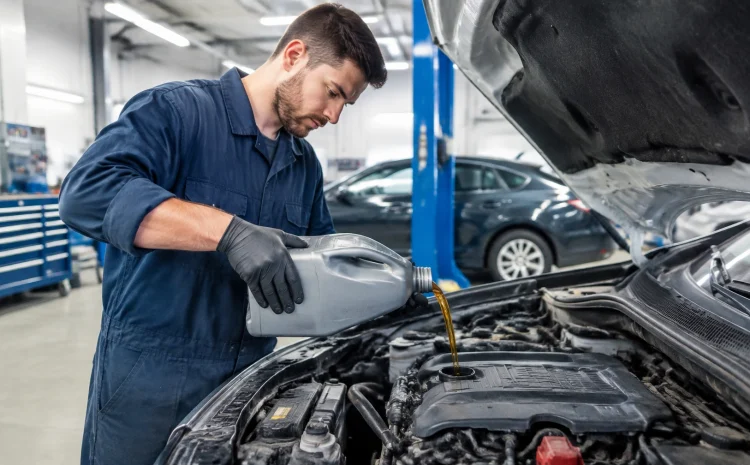
An oil change should be more than draining the old fluid and pouring in new oil. At a full-service shop, the technician should confirm that the service is correct for your specific vehicle and driving pattern.
A thorough oil-change visit typically includes:
- Draining the old engine oil completely
- Replacing the oil filter
- Installing the manufacturer-recommended oil grade and quantity
- Checking for leaks around the drain plug, filter, and engine
- Confirming the oil level after the engine has been run and settled
- Resetting the oil-life monitor or service reminder when applicable
- Looking for obvious concerns such as damaged components, fluid leaks, or worn belts and hoses
It is also a good opportunity to discuss your actual driving. “Mostly short trips around Burnside” tells a technician more than a generic mileage number. They can help match the maintenance schedule to how the vehicle is really being used.
At Higgins Driscoll’s Automotive, oil changes are part of broader vehicle maintenance for all makes and models. Our Red Seal technicians can help identify the correct oil and filter for your vehicle and point out maintenance concerns that deserve attention, without turning a routine visit into a pressure-filled sales pitch.
Why fall is a smart time to book
An oil change before the coldest weather arrives gives your engine fresh, correctly specified oil when cold starts become more demanding. It also gives you an opportunity to address related winter concerns before they become urgent.
Ask about a seasonal check of:
- Battery starting performance
- Coolant protection
- Tire pressure and tread condition
- Windshield washer fluid
- Belts, hoses, and visible leaks
- Heating and defrosting performance
This does not mean every driver needs an expensive package. It means the vehicle should be assessed according to its condition and use. Good car maintenance in Nova Scotia is practical, timely, and based on the way you drive.
If your vehicle needs more than routine maintenance, a full-service shop can also investigate warning lights, engine concerns, heating issues, or other problems before winter travel makes them more disruptive.
The bottom line for oil changes in Dartmouth
For a vehicle that spends most of its time on longer drives at operating temperature, a 10,000-kilometre interval may fit the manufacturer’s normal schedule.
For many Dartmouth and Burnside drivers, the reality is different. Cold starts, short commutes, traffic, and winter idling can qualify as severe service. In that situation, waiting for 10,000 kilometres may be too loose. A shorter interval, often around 5,000 kilometres or three to six months, can be the more sensible planning range, provided it agrees with your vehicle’s manufacturer guidance.
Book your oil change before the cold sets in, and let the technician know how you actually drive. Contact Higgins Driscoll’s Automotive in Dartmouth to schedule service and keep your vehicle ready for the Nova Scotia winter.