Is Squeaky Braking Bad? Why Every Dartmouth Driver Needs a Brake Service Check-Up
We’ve all been there. You’re pulling up to a stoplight on Portland Street or navigating the busy turns near the Mic Mac Mall, and as you press the brake pedal, a high-pitched squeal pierces the air. It’s loud, it’s embarrassing, and it’s a sound that makes every driver in Dartmouth cringe. Your first thought is usually: Is this a “five-minute fix” or a “whole paycheck” problem?
The truth is that brake noise is one of the most common reasons people visit an auto repair shop in Dartmouth, but it’s also one of the most misunderstood. In a place like Nova Scotia, where the air is salty, the hills are steep, and the winters are brutal, your brakes are under constant siege. A squeak isn’t just an annoyance; it’s your car’s way of talking to you.
But does every squeak mean you’re in danger? Not necessarily. However, in our experience at Higgins Driscoll’s Automotive, ignoring that sound is the fastest way to turn a simple maintenance task into a massive repair bill. Let’s break down why your brakes are making that noise and why local conditions make a regular brake service in Dartmouth absolutely essential.
The “Morning Squeal”: Is It Just the Dartmouth Fog?
Living near the harbor has its perks, but the humidity isn’t one of them for your car. If you notice a light squeaking or a slight grinding sound the very first time you use your brakes in the morning, it might actually be “normal.”
In our maritime climate, overnight moisture and heavy coastal fog often cause a very thin layer of surface rust to form on your brake rotors. When you back out of your driveway and hit the brakes for the first time, the brake pads have to scrape that thin layer of oxidation off. This usually results in a brief squeak or a raspy sound that disappears after the first two or three stops.
However, if that sound doesn’t go away by the time you’ve reached the office in Burnside, you’re no longer dealing with surface rust. You’re dealing with a mechanical warning.
Deciphering the Sounds: What Your Brakes Are Trying to Tell You
Not all brake noises are created equal. Depending on the pitch and the timing, you can usually narrow down the culprit before you even lift the vehicle.
The High-Pitched Continuous Squeal
Most modern brake pads are designed with a built-in safety feature called a “wear indicator.” This is a small metal tab that becomes exposed as the friction material on your pad wears down. When the pad gets thin enough, this tab makes contact with the rotor, creating a persistent, high-pitched squeal. Think of it as an alarm clock telling you it’s time for a check-up. If you hear this every time you apply the brakes, it’s a clear sign you need to look into brake service in Dartmouth sooner rather than later.
The Deep Metal-on-Metal Grind
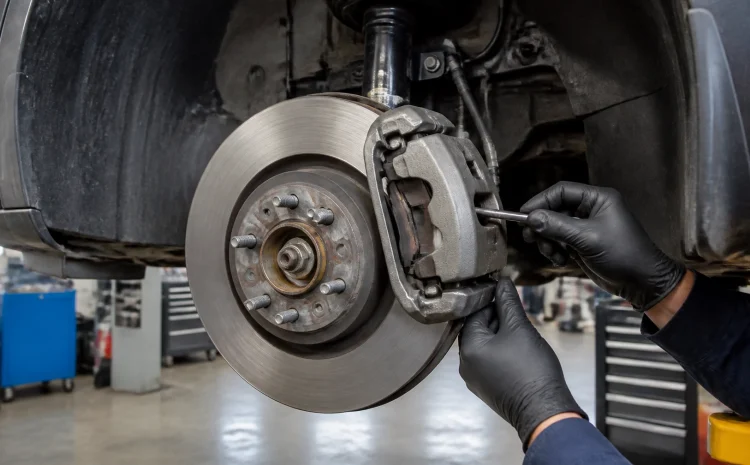
If you’ve moved past the squealing phase and are now hearing a deep, growling, or grinding sound, you’ve reached the “danger zone.” This usually means the brake pad material is completely gone, and the metal backing plate is pressing directly against the metal rotor. This isn’t just a safety hazard; it’s destroying your rotors. At this point, a simple pad replacement is no longer an option, and you’ll likely need a full rotor replacement as well.
The Occasional “Thump” or Clunk
If you hear a clunking sound when you hit the brakes, it could indicate a loose caliper or worn-out suspension components. This is particularly common for drivers frequently dealing with the potholes and uneven pavement found in car repair Burnside industrial areas.

Why Dartmouth Drivers Face Faster Brake Wear
You might find that your cousin in the prairies gets 80,000 kilometers out of a set of brakes, while you’re lucky to get 40,000. It’s not just your driving style; it’s the geography. Our local environment is a perfect storm for brake degradation.
1. The “Hill Factor”
Dartmouth is many things, but “flat” is not one of them. Whether you’re descending the steep grades of the Circumferential Highway or navigating the downtown slopes, your brakes are working significantly harder than they would in a flat city. Constantly riding the brakes on a long descent generates immense heat. This heat can lead to “glazing,” where the brake pads become hardened and smooth, losing their “grip” and causing a persistent, high-pitched squeak even if the pads aren’t fully worn out.
2. Stop-and-Go Traffic
The daily commute through the MacKay or Macdonald bridges is a masterclass in brake wear. Constant idling, creeping forward, and sudden stops in heavy traffic mean your braking system never gets a chance to cool down properly. This repetitive cycle of heating and cooling can cause rotors to warp over time, leading to that annoying vibration you feel in the steering wheel when you slow down.
3. The Salt and Brine Dilemma
Nova Scotia winters are legendary for their use of road salt and liquid brine. While these keep the roads safe, they are incredibly corrosive to your braking hardware. Salt can cause the slider pins in your calipers to seize up. When a caliper seizes, the brake pad doesn’t retract fully from the rotor. This causes the pad to stay in contact with the rotor while you drive, creating friction, heat, and: you guessed it: constant squeaking and premature wear.
The Cost of Waiting: Why Proactive Maintenance Saves Money
One of the biggest mistakes we see at our shop is a driver waiting until the noise is unbearable before coming in. We understand the hesitation; car repairs can be stressful. But with brakes, the “wait and see” approach is the most expensive strategy you can take.
A standard brake service often involves cleaning the hardware, lubricating the slider pins, and perhaps replacing the pads. This is a relatively affordable maintenance task. However, if you wait until the pads are gone and the rotors are scarred, the cost can triple. Beyond the parts, there is the safety factor. A braking system that is squealing or grinding is not operating at 100% efficiency. In an emergency stop on a rain-slicked Dartmouth road, that extra 10 feet of stopping distance could be the difference between a close call and a collision.
Investing in preventive maintenance is always cheaper than reacting to a total system failure.
What Happens During a Professional Brake Check-Up?
When you bring your vehicle to Higgins Driscoll’s Automotive, we don’t just “look” at the pads. A comprehensive brake inspection is a deep dive into the safety of your vehicle.
Our Red Seal certified technicians examine:
- Pad Thickness: We measure exactly how much life is left in your friction material.
- Rotor Condition: We check for thinning, “hot spots,” or warping that could cause vibrations.
- Caliper Function: We ensure the pistons and sliders are moving freely and aren’t victim to Nova Scotia’s road salt.
- Brake Fluid: We check for moisture contamination. Brake fluid is hygroscopic (it absorbs water), which can lower its boiling point and lead to a “spongy” pedal feeling.
- Lines and Hoses: We look for cracks or leaks that could lead to a sudden loss of braking power.
Trust the Locals for Your Brake Service
At the end of the day, a squeak is a signal. It might be a minor warning about the weather, or it might be a major SOS from your car’s most important safety system. Given the hills, the salt, and the traffic we deal with every day in Dartmouth and Burnside, you can’t afford to guess.
At Higgins Driscoll’s Automotive, we’ve spent over 60 years helping our neighbors stay safe on the road. As a family-owned business, we pride ourselves on honesty. If your brakes just need a quick cleaning and lubrication to stop that morning squeak, that’s exactly what we’ll tell you. No upselling, no corporate pressure: just quality workmanship that gets it fixed right the first time.
Don’t let a small squeak turn into a big headache. Whether you’re coming from Woodside, Cole Harbour, or the North End, stop by for a professional check-up.
Is your car trying to tell you something? Listen to the signs and get your brakes checked today. Contact Higgins Driscoll’s Automotive for the most reliable brake service in Dartmouth. Book your appointment now and drive with peace of mind.